
✦ Today's cosmos
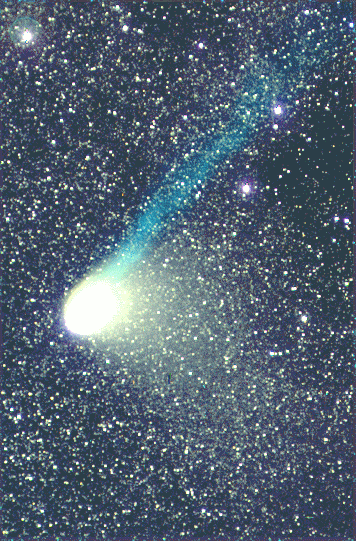
Comet Hale-Bopp Develops a Tail
NASA Astronomy Picture of the Day · February 12, 1997
Tap the image for full resolution ↗
Image credit & copyright: P. H. Mikuz and B. Dintinjana
(Crni Vrh Obs.,U. Ljubljana) · via NASA APOD
◆ What you're looking at
Comet Hale-Bopp has quite a tail to tell already.
This remarkable comet
was first discovered in 1995, even
before Comet Hyakutake. Since then,
this erupting snowball continues
to fall into our inner Solar System
and is starting to put on quite a show. Comets
have been known throughout history to show tails that spread across
the sky. In the above picture, the blue stream is the ion tail
which consists of ions pushed away from the comet's head
by the solar wind.
The ion tail always points directly
away from the Sun. Comet Hale-Bopp
is now visible in the morning sky,
moving a few degrees each day. Comet Hale-Bopp
is expected to be at its best and brightest in late March and early April.