
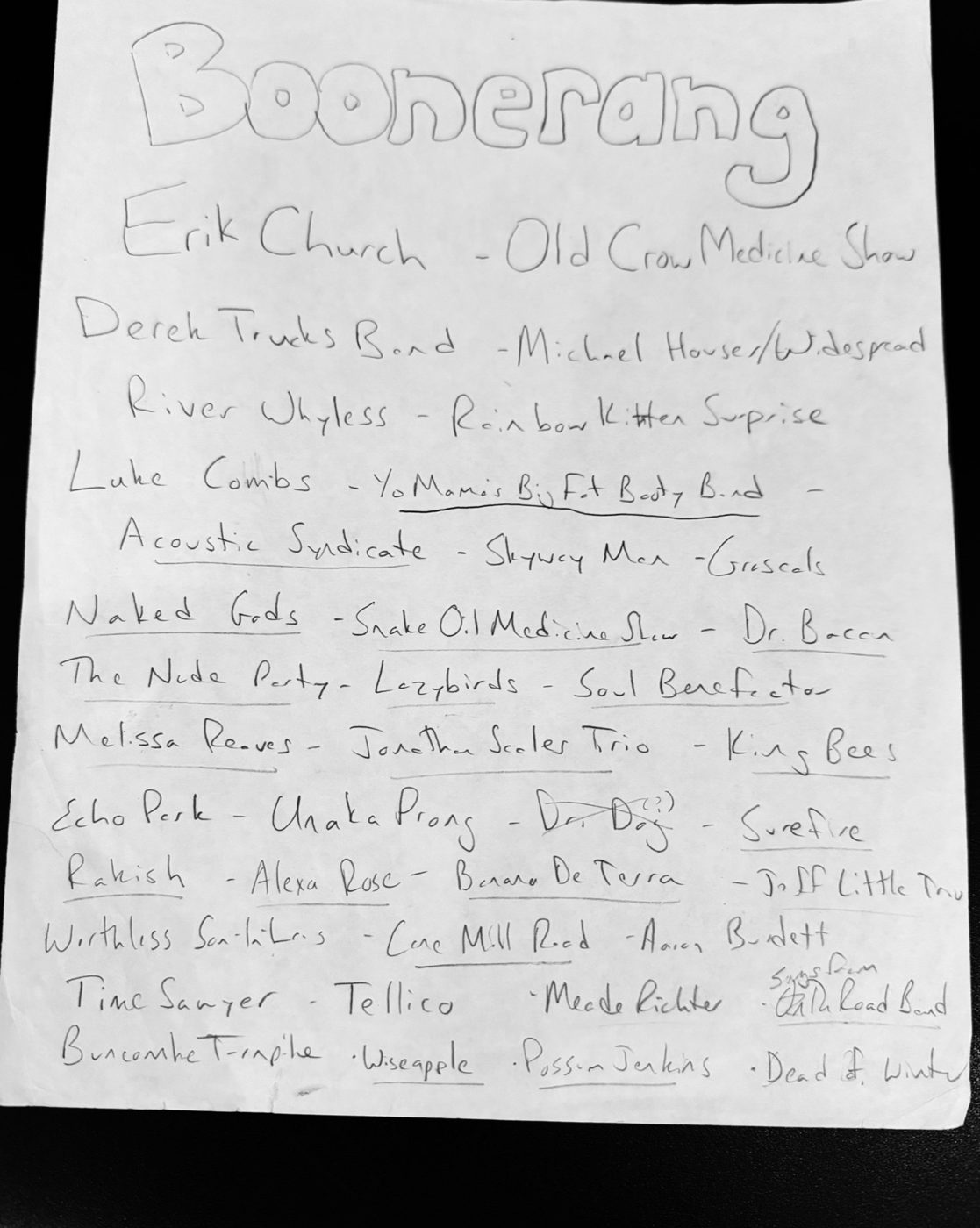
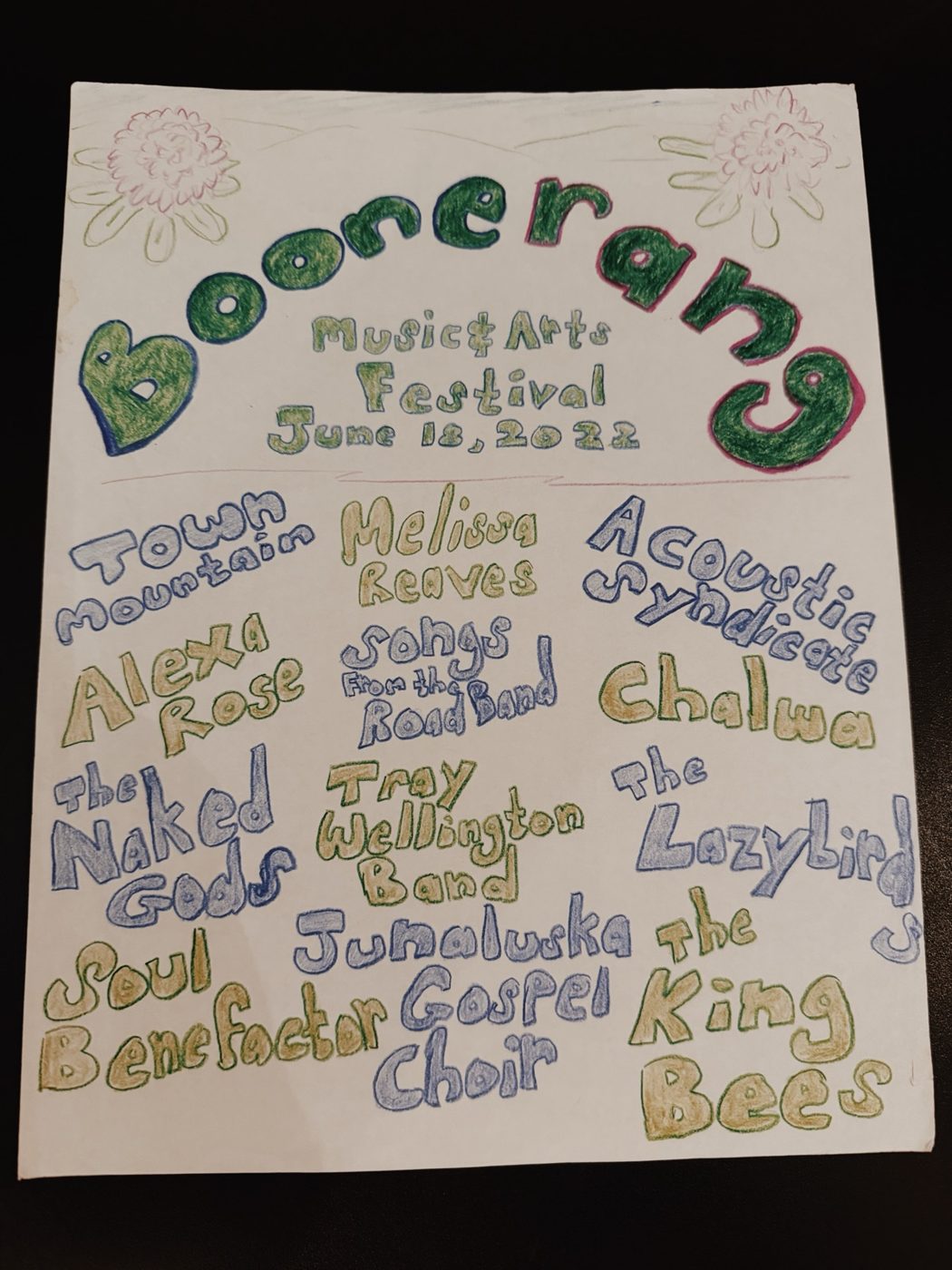
Mark Freed wrote down every band he could think of with a Boone or App State connection. Eric Church. Old Crow Medicine Show. Derek Trucks, who, as Freed tells it, supposedly got his GED through Watauga High. Michael Houser of Widespread Panic, born in Watauga County. River Whyless and Rainbow Kitten Surprise, both still coming up at the time. Luke Combs, who went to App State, sits a few lines down, not yet at the top of anything. The names slide from arenas toward the bands that play your local fundraiser.
He doesn't remember the day, or whether it was the first version of the list. He remembers looking at it and thinking, okay, we need to do something.
Up the creaky stairs
The door chime rang at the Jones House as I walked in the backdoor and Mark Freed came down the creaky stairs to greet me. We went back up together past his office where stringed instruments hang on the wall and a banjo box and a guitar box sit on the floor in front of his desk. We continued past a room with an old piano. He was wearing a Boonerang hoodie. He poured coffee for us and we found friends we had in common. Boone is a small town that way.
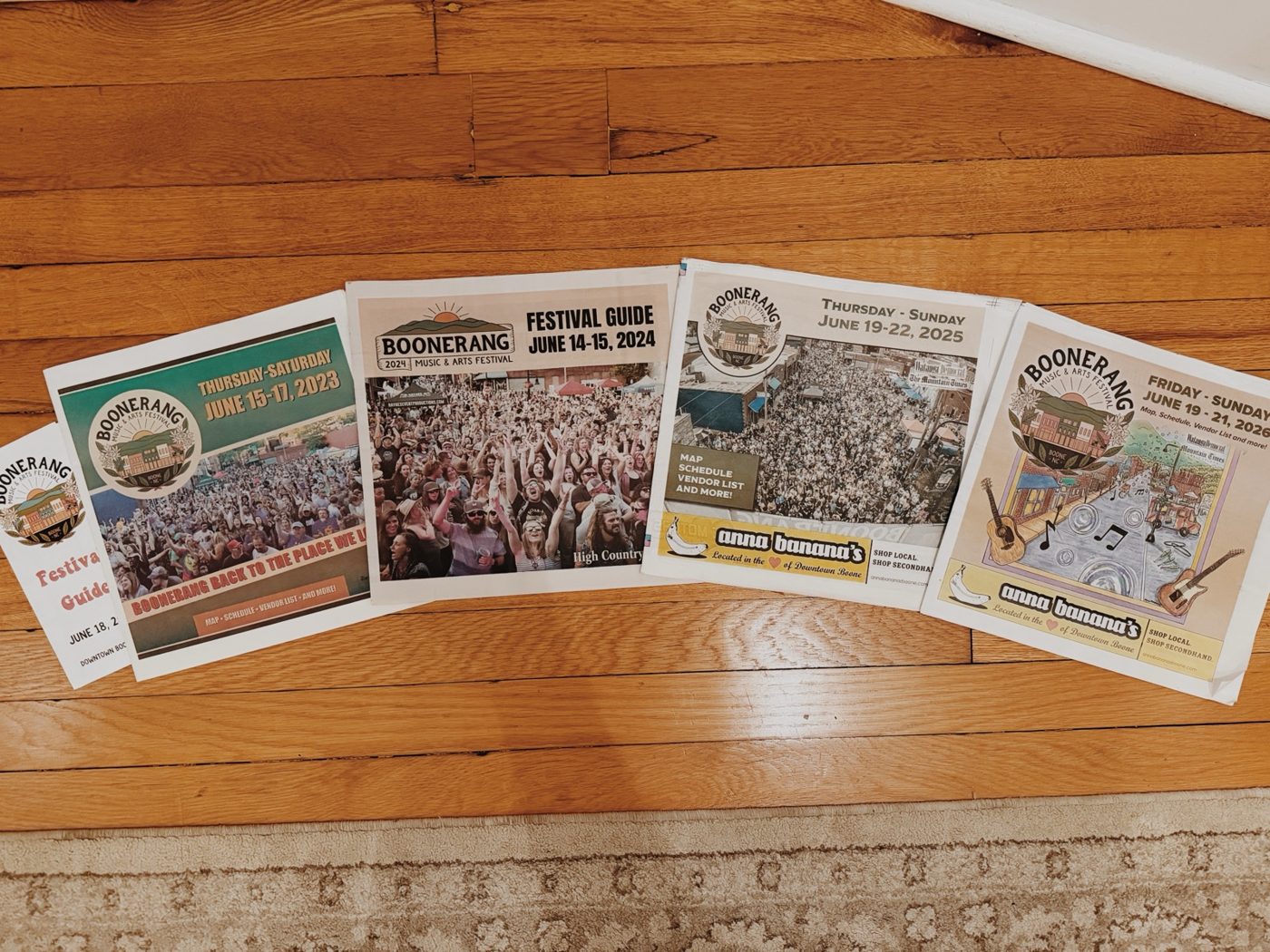
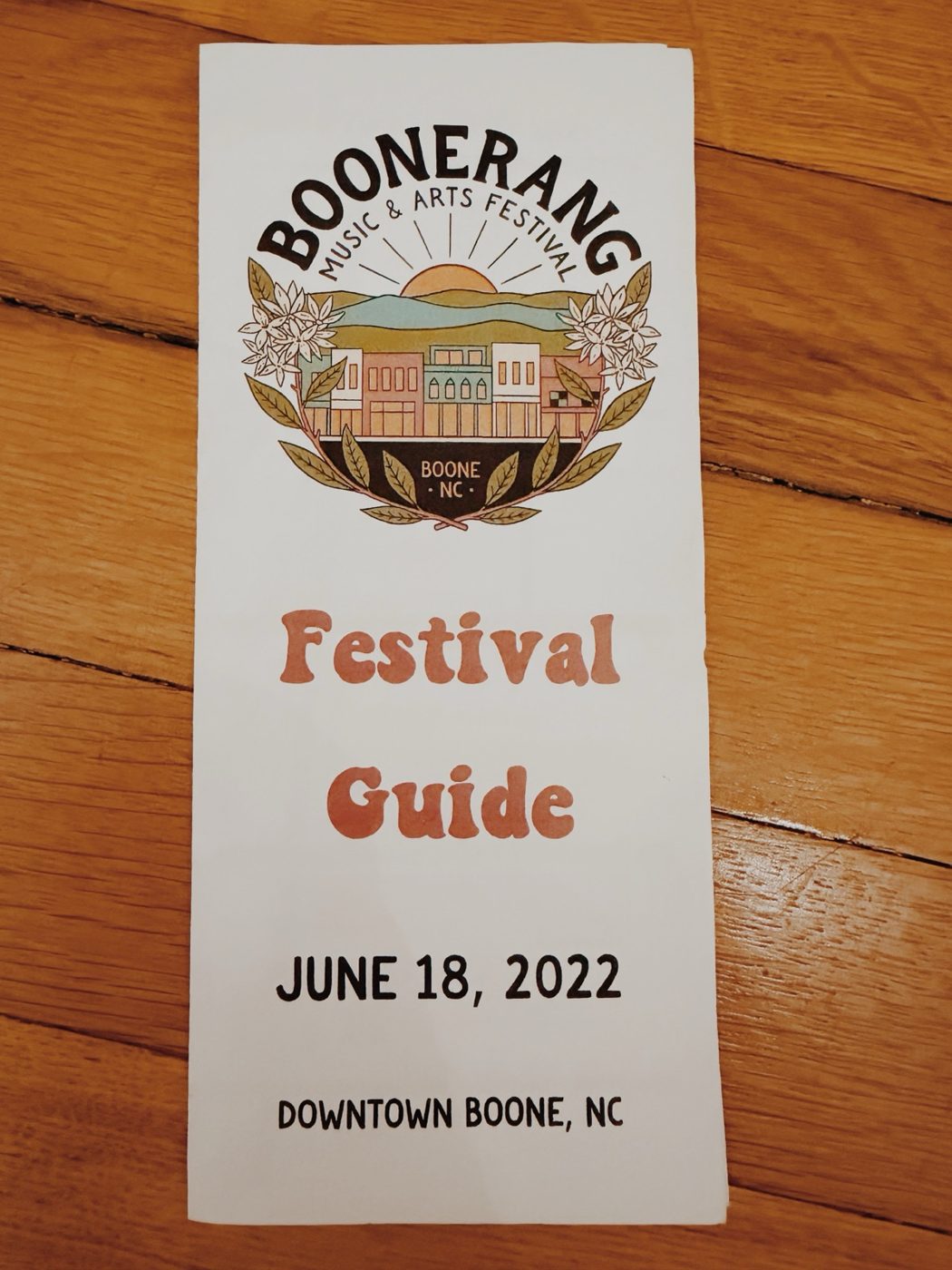
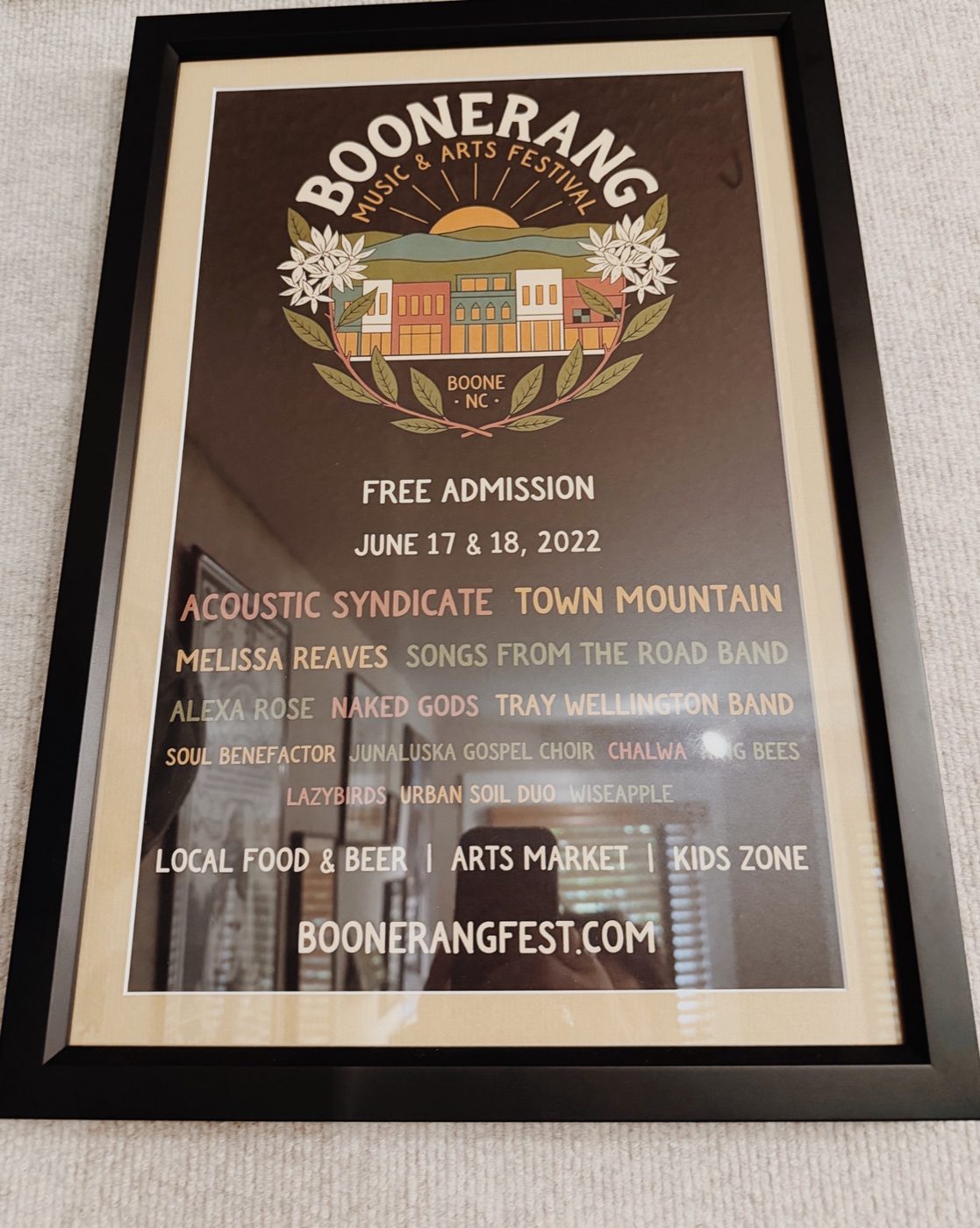
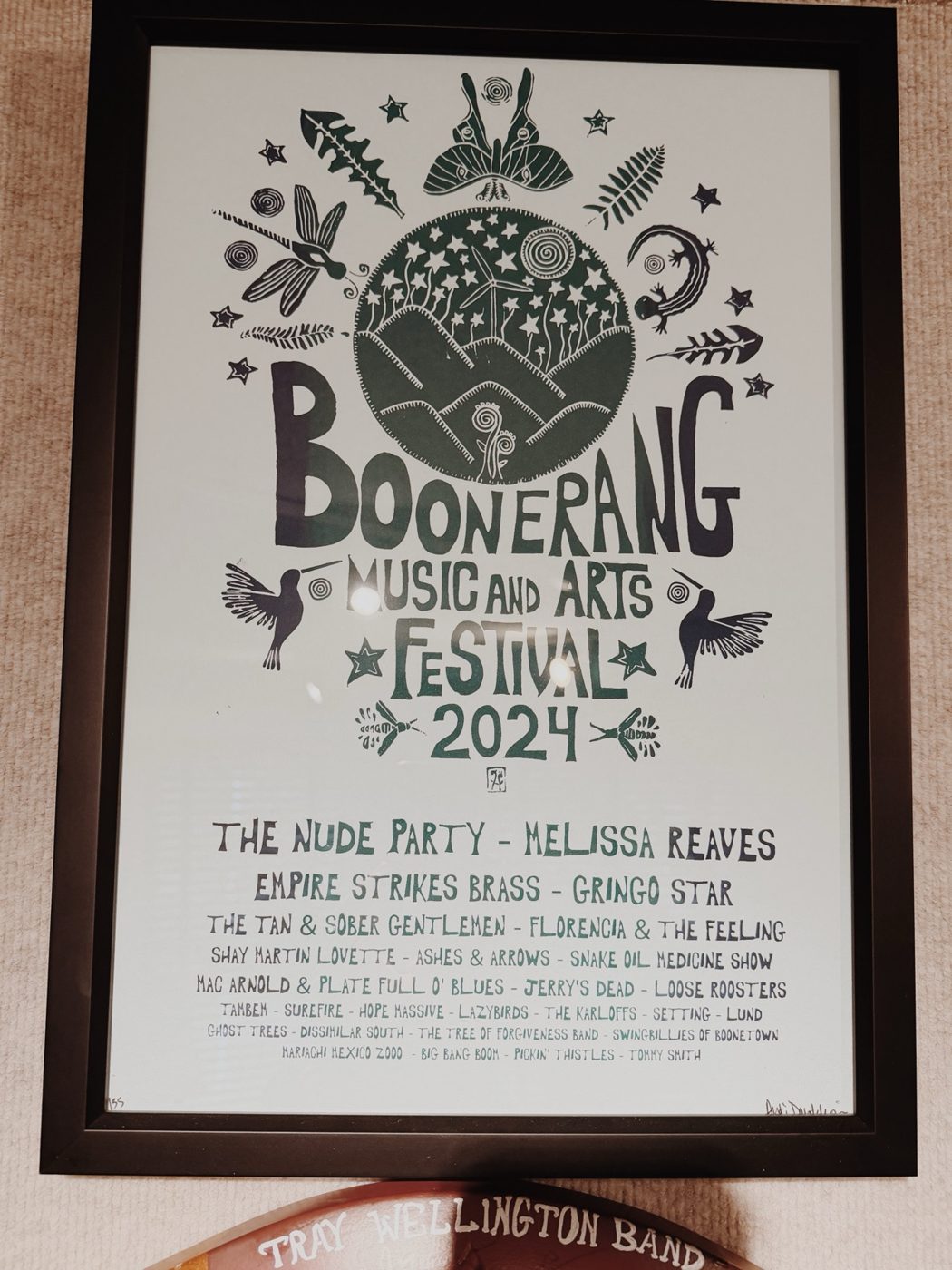
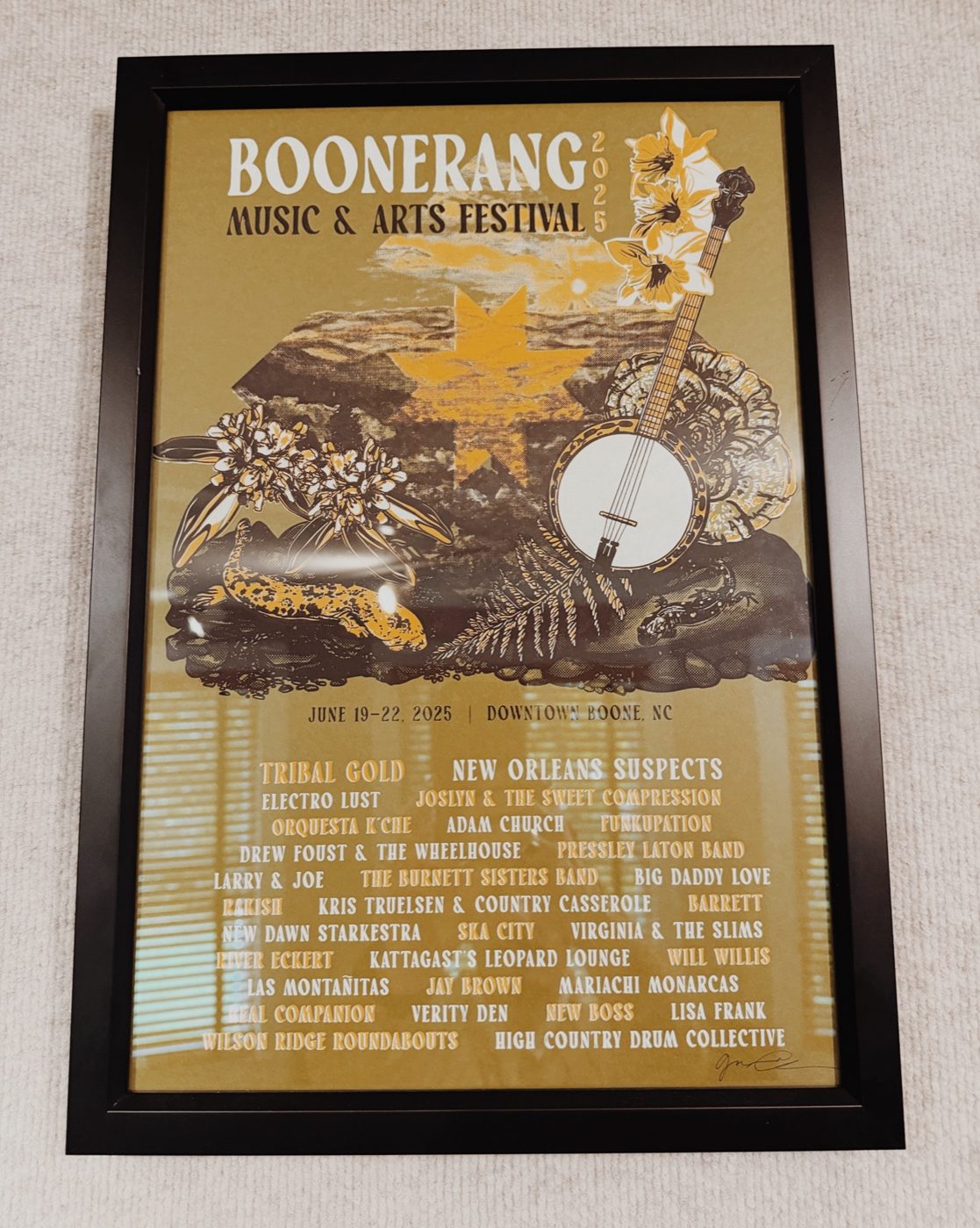
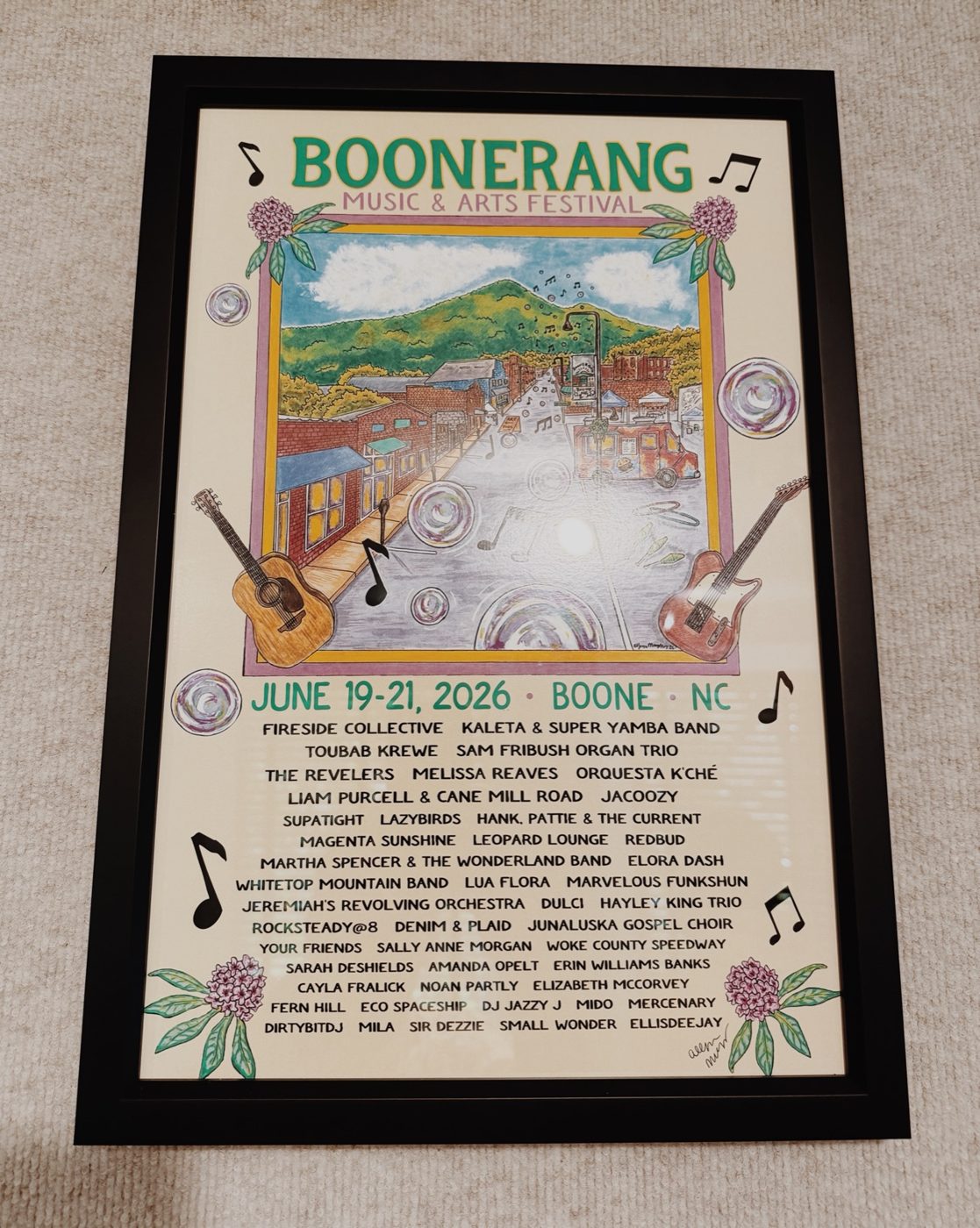
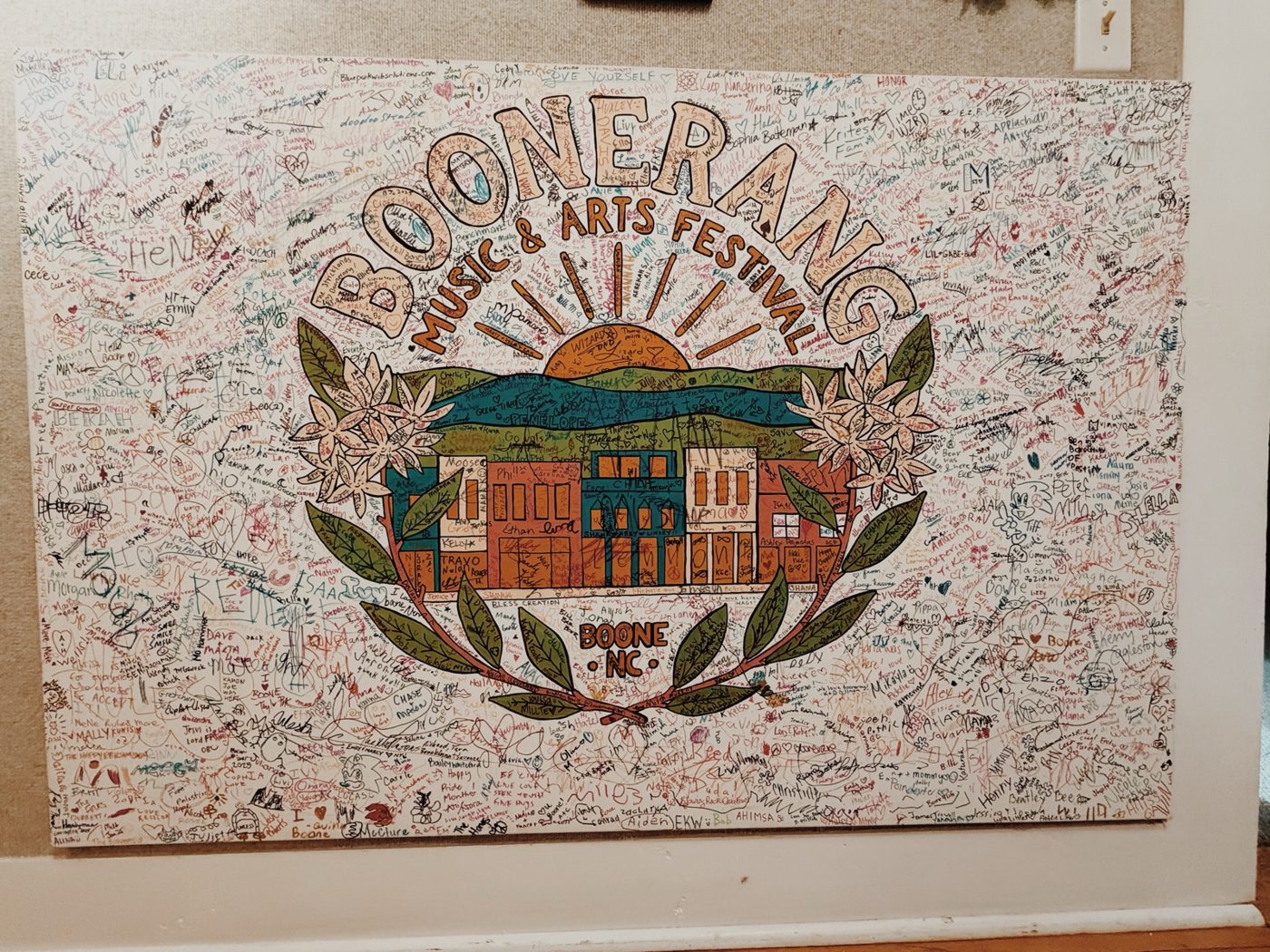
Freed is the Town of Boone's director of cultural resources. That means parades, holiday celebrations (the Boone BOO on Oct. 31 among them) and the community center in this building. He is also, as he describes it, the self-titled Director of Boonerang. The room where we talked felt like the festival's archive. Every year's poster hangs framed on the wall, and a Boonerang print signed by people who have attended hangs below them. Mark had pulled the printed festival guides and we set them out, oldest to newest. The first is a tiny tri-fold. It was such a hit that the next year's was full size, and now it is a full on newspaper with articles and ads.
It had been tried
A downtown street festival was not a new idea in Boone. Freed will tell you that first. When he started programming downtown in 2005, the Kraut Creek Festival put two stages facing each other on a closed Howard Street, named for the creek that runs beneath it and the sauerkraut factory that supposedly made it smell. Freed remembers Daniel Boone Days next, put on by Sam Calhoun, a friend writing for the Mountain Times then and now with FloydFest in Virginia, with a race up Howard's Knob and a an alleged Guinness attempt at the most coonskin caps in one photo. He remembers Cyclovia shutting the streets down for bikes and skateboards and anything else with wheels.
None of them lasted. Freed’s office has something no one else did — a payroll. Town salaries cover much of the event staff, so the festival doesn't have to. Public works closes the streets. The police are already on the clock.
"We have a lot of privilege in our position," he says. "Nobody told us to do it."
Six months
And the office had been warming up. For years it threw the Jimmy Smith Run and Street Party, a small race around Jimmy Smith Park followed by a party on South Depot with a beer garden, food trucks and live music. It drew about 500 people. Council cancelled the 2021 edition, the third, during COVID. Freed says the programming money the office couldn't spend carried forward.
So there was a reserve, a list, and a staff that had run enough events to know what it didn't know. Freed sat down with Brad Farthing and Brandon Holder and asked whether they really wanted to do this. They said that they did — in January 2022, which left them about six months.
They went to Council for two things, the street closure and the open-container allowance. Freed says the programming money was worked out with then Town Manager John Ward and taken to Council as a mid-year budget amendment. Mayor Tim Futrelle heard about it, and so did the Downtown Boone Development Association (DBDA) and the Tourism Development Authority, for vocal support and then money. Freed had assumed sponsors would want to see a proven event first. Then Sarah Long of 828 Real Estate asked, at a DBDA meeting, whether she could sponsor anyway. Dona Dowlan called to help her kid get connected to the music scene, and Freed asked if she'd be volunteer coordinator. She has been ever since.
The name wasn’t new — or solely theirs. Freed heard "boonerang" when he first moved here, from students who come for school, love the mountains, leave to find work and come back. It was a colloquial phrase before it was a street festival. The High Country hustle is real, he says. Not everyone can make it work. But, this place pulls you back. It fit the one rule they set from the first year, which was that the acts had a Boone connection. 100 percent the first year. Less so now. And Freed says the door opened wider for good reasons. There is no local Boone mariachi band, for instance but they love putting one on the street each year.
The first weekend
Friday night of year one was supposed to be easy. The first three bands played the Jones House lawn, and rain hit right before the start. Of course it did. The Watauga Arts Council (WAC), running the beer trailer, sent its volunteers home. The mayor introduced Urban Soil Duo to about a dozen people. By the end of their set the lawn was packed. By the time Lazybirds played, the crowd was spilling off the property, and WAC was scrambling for help and cups.
Saturday morning was a different kind of problem. Freed was alone. He got in around 6 a.m. and walked into the back lot to find about sixty roll-off bins for trash and recycling and a pile of tents that should have been up the day before. Half the staff wasn't due until eight. He remembers asking himself why he had sent people home on Friday.
He started calling people.
The reaction in town split two ways, he says. Some people said, oh my gosh, do you all see this? Others said, where has this been?
Friends of mine who grew up here describe it a third way — a high school reunion. They go downtown because they will see everyone they haven't seen in two years. Freed said he loved that. Year one was the town's first big community event out of COVID, and he says he now hears from people who plan their visits home around the weekend.
Five years, now the right size
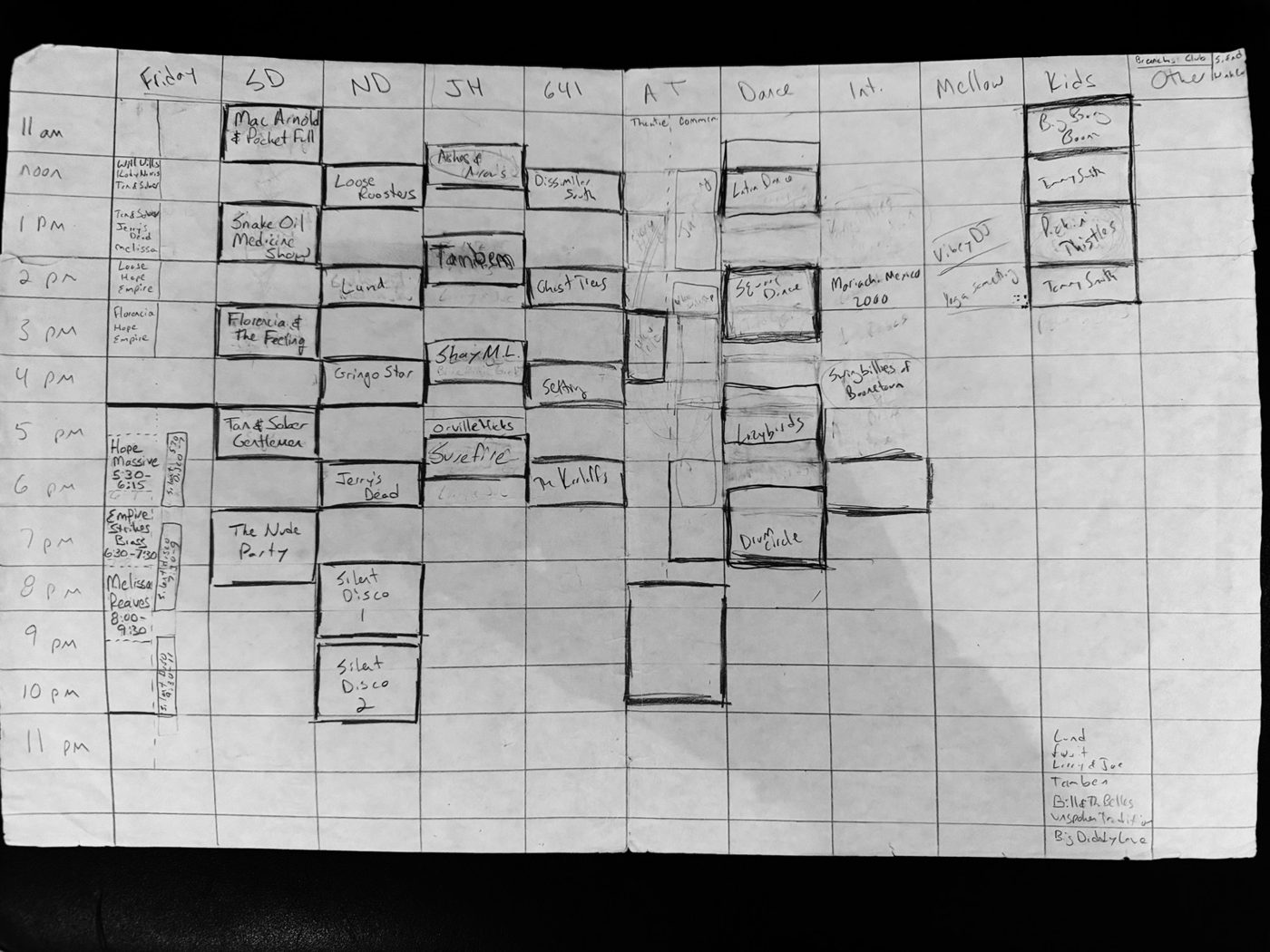
Each year is a version with adjustments. The bounce houses went in year two, because the blowers drowned the music and kids stood in line instead of seeing anything else. The feedback was as loud as the fans. Where are the bounce houses? By year three, Freed says, nobody was asking. Someone had fallen asleep in a rocking chair outside a shop, making it evident there was no event-hosted place to sit, and the Mellow Lounge appeared with free tea. Friday outgrew the lawn, then outgrew North Depot, where the crowd was backing up onto the library and Queen Street, and landed at South Depot. In 2025 there was remote parking with a free shuttle — the fewest parking complaints they have had, and as far as Freed knows nobody got towed.
Then the part he is proudest of. Years three, four and five drew about the same crowd. It hasn't grown, and — for that — he is glad. The last thing he wants is for people to say it's Boonerang weekend, stay away from downtown.
points to Bele Chere, the Asheville street festival that, in his telling, became the largest free one in the Southeast and outgrew its welcome. That is the line he is trying not to cross — outgrowing one's welcome So the headliners stay deliberately small. He has gotten quotes for some of the names from that first sheet of paper and knows which bands have left his budget. He doesn't want a night when thousands flood downtown for one act. He wants a weekend, and he wants the people who live here to keep saying they're going down.
Who it's for
Ask him what success looks like and he skips the money. Nobody has scrutinized Boonerang that way, he says. He gives Council a report every year anyway, unasked, and in the early years asked them to say so if they'd rather the time and money go elsewhere. They remain supportive.
It isn't an economic development project, he says, and it doesn't work for everyone. By Freed's account, Lumina, the nail salon on Howard Street, closes on Saturdays because its customers don't want to deal with a festival, and gives the staff the day off. Wildwood Market and Black Cap Burrito, he says, have reported their best weekends ever. When lightning delayed the 2025 festival, downtown businesses told him to bring on a delay every year. People ducked into shops and spent money.
What he wants to see is locals on the street. People in the High Country often know when something is happening downtown and they stay away. Boonerang flips that on its head. Freed says "Who wants to live in a place that doesn't have things like that?"
The festival gives back, too. A fund with WAC lets any public school teacher in visual art, theater, dance or music apply for money with a short form and no reporting. Nonprofits pour the beer through a pouring partners program and get support for their missions in return. The Boonerang International Celebration puts a parade of nations on the street and shows, Freed says, how diverse the High Country is in a way you don't always see walking down King Street.
What he won't change
Freed says three things are not up for negotiation. One: it stays free. Two: it stays downtown. Three: it stays Boone. He has thought about moving it to the Greenway, where there's room and no business to disrupt, and says it could be a fine festival. When the designer sent the first draft of the logo, it was a rural mountain scene with no buildings in it. He sent it back. This is a street festival, he told them, and it needs some concrete. A greenway version would be a different event. "I'd want to rename it."
It is also why he turns down the safe version of the future. Every year, the week after the last band packs up, the team has the same heart-to-heart about whether to put out dates for next year. They don’t commit to a date until the one in front of them is done.
The list
There is still a way onto the next sheet of paper. Boonerang doesn't take applications for the festival itself. It curates. How? Through The Battle of the Bands, for one. The first year drew 40 or 50 applications, and local bands did best. Applications for 2027 are open until December 1. Selected bands play one of two showcases in February and March at the Appalachian Theatre. The audience picks the winner, who gets a cash prize and a slot at the June festival.
Every year, the week after the last band packs up, Freed’s team asks whether they’re doing it again. Year six is June 18 to 20, 2027. The team said yes.