
Howard Street's Social District Could Go Downtown-Wide
A push is on to widen Boone's proposed social district from Howard Street to all of downtown. The town's downtown director says it's still early to pin down a timeline. Here's what exists, who already has one, and what nobody has counted.
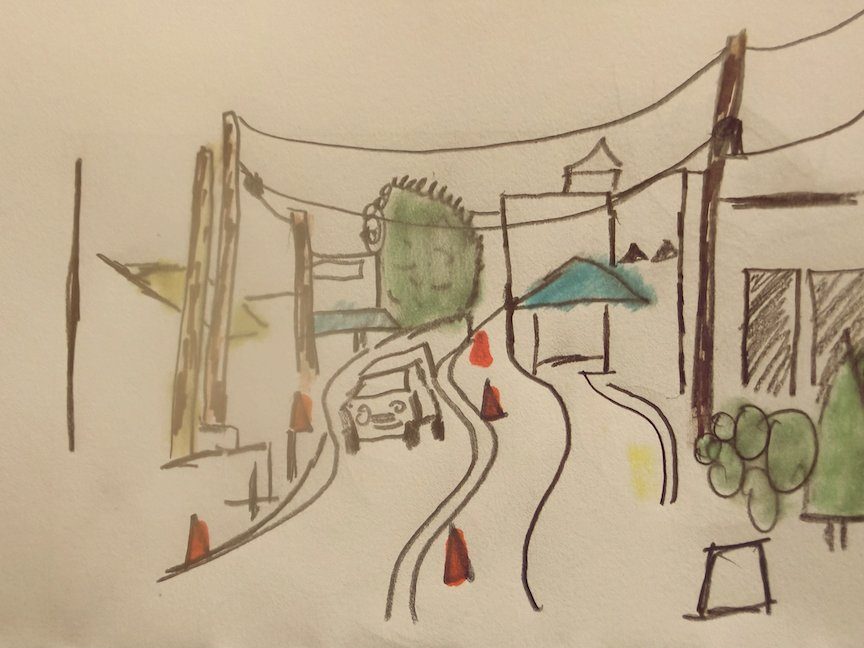
Howard Street is in its last stretch. The final lift of asphalt is nearly down, according to the town's weekly construction updates, with crews milling and paving Burrell Street at the end of September. Power centers are still going in, and the last streetlight poles come next. The sections that have reopened already run one-way. There's no completion date. There's no ribbon-cutting date either, though the downtown board had a party budget and a planning committee on its Sept. 29 agenda.
And somewhere behind those orange cones, a downtown committee has been working up something that would have gotten a council member laughed out of chambers for most of this town's history. A social district. A mapped stretch of downtown where a drink bought at one bar can legally walk out the door and down the sidewalk into the next one.
Here's where it stands.
Nothing has been approved. There's no ordinance, no text and no council vote. But the idea got bigger last week. A committee had sketched a district for Howard and Depot streets. Then, at the Downtown Boone Development Association's Sept. 29 board meeting, the push turned to the whole downtown tax district. Megan Kevorkian, a board member who was in the room, says a majority voted for the map going to council to cover all of it. The town hasn't confirmed that. Lane Moody, the town's Downtown Development Director, is still working on draft minutes, and says it's "still a little early to pin down a timeline." And there's a gap that matters more than any of that. We went looking for before-and-after revenue and safety data from towns that already have a district. We couldn't find any. What Boone has instead is opinion.
Four people, a map and a vote
The committee belongs to the DBDA, a 12-member downtown board. Town Council appoints six of its seats and the board picks the other six itself. Four people sit on the committee. Lane Moody, the town's Downtown Development Director. Joe Lynch, who manages the Speckled Trout Outfitters shop on Depot Street. Megan Kevorkian, who owns and manages SouthEnd Brewing on King Street. And Mayor Dalton George.
Until last week the draft map covered Howard Street and Depot Street, south of King only. The hours would be weekends only. The language doesn't exist yet. Moody says it is not far along at all. The committee isn't reinventing the wheel, she said. It will likely borrow another community's ordinance.
Then, on Sept. 29, the idea changed shape. Kevorkian says the committee, which she calls the Economic Vitality Committee, proposed a limited map to the DBDA board. Members and guests at the meeting asked for it to be expanded to the full municipal service district, the downtown zone whose property owners pay an extra tax that funds the DBDA. A motion was made on whether the map presented to council should include the whole district, and a majority voted yes, she says. SouthEnd is inside it. She isn't sure whether the proposal would be positioned to council as a trial, and says maybe both options will be presented. Some DBDA members still object. Others asked why Boone isn't doing it everywhere. The board is roughly split, she says, between businesses that serve alcohol and businesses that don't. Kevorkian is our source for what happened in the room. She sits on the committee and owns and manages a brewery inside the district. The board's minutes aren't out yet. Moody didn't confirm or dispute the vote and says she's still working on the draft minutes. She says the discussion now includes "potentially the full MSD," and that the committee will need more time to bring everyone in.
The idea is older than the committee. In March 2025, then-Mayor Pro Tem George asked council to talk about a Howard Street district at a work session. The minutes have him suggesting a one-year trial and noting that the town already operates like a social district on football game days. Council Member Todd Carter wanted to experiment, since it could be dropped if it flopped. Council Member Virginia Roseman said she'd pictured a pedestrian-friendly Howard Street for decades. Then-Council Member Edie Tugman voiced strong opposition, citing the burden on police and public disorder. The interim police chief listed crowd control, drug and alcohol use, noise, vandalism and policing challenges. George said he'd bring it back for a vote.
So why did a year and a half go by? George says the wait was the construction. The goal, he told us, is to open the district as close to Howard Street's finish as they can get it. He calls it "another tool in our tool belt" for the businesses that have spent the whole rebuild behind the cones.
A dry town, then a wet one
Boone was dry for 37 years, and not metaphorically. From 1949 until voters changed it in March 1986, you couldn't legally buy a beer in town, let alone a bottle of wine or a shot of anything. The March 18 referendum passed by roughly 70 to 30, UPI reported at the time, with turnout almost double the previous fall's municipal election. Beer, wine and a state-run liquor store all won.
Mixed drinks were a separate fight, and Boone lost the first round. Voters turned down liquor by the drink in January 1993, by 310 votes, per the Watauga Democrat's archives. The second try passed on Aug. 19, 2008, twenty-two years after the town first voted on alcohol. I can vouch for the gap personally. More than one college night got spent driving to Blowing Rock for an actual cocktail, because Boone still couldn't legally pour one.
Every loosening since has come town by town, never countywide. Unincorporated Watauga County still has no legal alcohol sales, according to the state ABC Commission's legal-sales chart. The last change we found to Boone's rules came in 2017, when council passed the so-called brunch bill on July 20. Restaurants could start pouring at 10 a.m. on Sundays instead of noon. Banner Elk, Beech Mountain, Seven Devils and Blowing Rock had already done it. One ordinance, one town at a time, decades apart.
What the other towns can show
Social districts exist statewide because of one 2021 law. Governor Cooper signed House Bill 890 that September. Buried in a larger ABC-rules overhaul was language letting any city or town map a district, register it with the state ABC Commission, and let permitted bars and restaurants sell drinks in to-go cups. Patrons can carry those cups between businesses during the mapped hours.
The cup rules were there from the start. No glass. Nothing over 16 ounces. A logo or other mark unique to the district on every cup, so police and businesses can tell at a glance that a drink was bought inside the district and not carried in from outside. The General Assembly reworked the law in 2022. It clarified where districts can go and let a town hand its management plans to a designee.
Kannapolis was among the first, opening a district on Oct. 1, 2021, about three weeks after the law was signed. Raleigh followed in 2022 with Fayetteville Street, then widened it in 2023 to run 10 a.m. to 10 p.m., seven days a week. More than 60 towns have registered one, per the most recent counts we could find, from Norwood, population about 2,500, to Raleigh, more than 500,000.
The stories from other towns are upbeat, mostly. But they're built from impressions and one-off claims. Kannapolis has a ballpark, new apartments and a rebuilt streetscape near its district, and Annette Privette Keller, the city's communications director, told The Assembly in 2025, "I feel like we're in a Hallmark movie." In Monroe, one restaurant co-owner told QCity Metro in 2022 that her revenue was up at least 10 percent since the district began. Charlotte's first district, in Plaza Midwood, sold more than 3,600 cups and about $28,000 in drinks in its first year, the city says. A merchants association board member told Spectrum News the group has received no official complaints from Charlotte police.
Run those numbers. Spectrum News counted about 15 participating businesses, though not all were active at launch. Spread across them, that's roughly 240 cups each over a year, a rough average, so treat it as a floor. Fewer than five a week. Good for goodwill, small for a balance sheet, and Plaza Midwood isn't a college town.
Not every town is sold. Durham has a district, and its restaurant scene has still churned hard. The Assembly reported that 50 restaurants and bars closed since 2020, per Downtown Durham, Inc., and that 95 opened, 49 of them after the district began. None of that is about open containers, and nobody is saying it is. Seth Gross, who runs Bull City Burger and Brewery, told the paper the district was "sort of like a cherry on top." It adds to the joy of being downtown, he said, but it isn't a big share of his sales.
Winston-Salem hadn't approved one as of The Assembly's reporting last September. Jason Thiel of the Downtown Winston-Salem Partnership said bar owners there want to try it, "but it just doesn't get past the police department." His broader worry, "If you provide this liberty to the population, it's going to be enjoyed by everyone," The Assembly tied that worry to public drunkenness and the city's unhoused residents. Greensboro has a district, but council members have stymied efforts to expand it, said Rob Overman of Downtown Greensboro, Inc. Some of them don't see why the city would want to promote drinking, he said.
George has his own answer on policing. His comparisons are Greenville, Chapel Hill and Elkin, and he says none of them saw crime go up after their districts opened. We couldn't find the numbers behind that. Neither Greenville nor Elkin has published crime counts for its district before and after launch. Chapel Hill doesn't have a town social district at all. It has entertainment districts, state permits that stop at a single property line. One is at Cedar Falls Courtyard. The other, at University Place, opened in September.
Five years in, we couldn't find a North Carolina town that has repealed a district. That's a point in its favor. It's also a low bar. These are quiet policies nobody revisits once they're running, and nobody is keeping score. We looked for before-and-after crime counts, police calls and sales-tax receipts for any district in the state. Public-health researchers hit the same wall in 2023. A May 2023 evaluation plan from UNC researchers found no existing research on the impacts of social districts.
What there is instead is a chorus. George says crime didn't go up in his comparison towns. Lynch expects no trash, noise or crime. Kevorkian says she hasn't heard of a lot of negatives in towns that already have one. Merchants in Charlotte say police haven't complained. They may all be right. But every one of those is somebody's read, not a count. What it does for a college town Boone's size is still an open question.
The people who'd pour
Lynch doesn't see a catch. His Depot Street shop already has a bar inside, with its own ABC permit. "People love to browse with their drink," he said, so joining the district is an easy yes. He says the shop's owners are for it, and so are the other downtown managers and owners he's talked to. "I see no downside to it." He doesn't buy the worries. "I do not believe it will add any trash, noise, or crime issues," he said. After the construction, his case is foot traffic. "The more eyes on storefronts, the better." As for the skeptics, "The truth is the only way to find out is to try it!" He already knows what he'd order. A White Russian.
Kevorkian wanted this bigger before the vote. "I'm in favor of just creating, you know, a walkable social district for all of downtown," she said. The trial she described would run Friday evening through Sunday evening and wrap up around 10 p.m., when she says the town's noise ordinance kicks in anyway. George had pushed for a smaller trial first and room to grow later, she says, because some longtime owners are nervous about more drinking this close to campus. We haven't heard his view of the board's vote. By Kevorkian's read, the downtown businesses that pour aren't pushing back. The worry is coming from the ones that don't. "For those who have been in Boone for decades and may not want to see increased change specifically around alcohol, there is apprehension and fear." Her answer to skeptics is the one she gave the board. She comes from public health, she said. Give people information and they slowly make their own choices.
She isn't selling it as a windfall, either. She doesn't expect SouthEnd's numbers to move much, maybe not for years. "We're not going to have ... a hundred more people that walk into SouthEnd because it's a social district," she said. Her bet is smaller. A customer asks if they can walk with a beer, gets a district cup, and goes to see what else Boone has. "Social districts are more about a general kind of feeling and welcomeness to an area." Her customers already ask. She wasn't sure whether a brewery could let someone walk in carrying a cup from another bar. State law says it can. It also says a business can refuse and still be in the district. Each bar decides.
What the rebuild already cost
Howard Street's reconstruction has already cost some businesses. At council's Sept. 9 meeting, Amy Forrester read a statement saying her business took a 28 percent hit from the traffic change that began Aug. 5, according to the minutes. She passed along guest complaints about parking, traffic and visibility. She said there wasn't enough public input before the project began.
Roseman raised her own concerns about parts of the project. The minutes have her noting that none of the current council members voted to approve the plans as they're being carried out. The record on the project itself is less clear-cut. In November 2024, council voted unanimously to tentatively award the construction contract, subject to state and federal financing approvals. Roseman made the motion. George, then Mayor Pro Tem, seconded it. Carter was in the room too. What changed between that vote and the plans now being built isn't clear from the record.
The fixes floated at the Sept. 9 meeting were modest. Town Attorney Allison Meade suggested temporary signs pointing drivers to businesses. George suggested the DBDA push that signage and run a marketing push with the Tourism Development Authority and the Chamber of Commerce, and that the interim town manager call NCDOT about speeding up traffic flow onto Appalachian and Howard. Council Member Adrian Tait asked for a left-turn signal onto Appalachian Street to go on a work session agenda. When Tait asked whether the DBDA had a marketing plan for after construction, George and Meade both said the proposed social district would be part of it.
What happens next
Boone isn't Kannapolis, Norwood or Monroe, and it isn't Raleigh either. It's a town of about 19,000 people that swells every fall when Appalachian State's students come back. The university counts 19,178 undergraduates this semester, down slightly from 19,732 last fall. King Street already fills with foot traffic that has nothing to do with any mapped district. The wider district being pushed includes SouthEnd Brewing on King, so the old line at King would be gone. The bet is no longer just on Howard and Depot. It's a bet on how a college downtown handles a few more legal hours a week of public drinking across the whole core, while Howard Street is still trying to become safer and more walkable.
Here's the road from here. The committee meets next week, around Oct. 9 by Kevorkian's account, to confirm the map. Kevorkian says the DBDA board then takes a formal vote on sending it to council. Who submits it is unclear. Moody won't put a date on it. "With the discussion now including potentially the full MSD, we'll need some additional time to bring everyone into the conversation and work through the details," she wrote in an email. Kevorkian says it may arrive as both a limited map and the larger one.
A few things are still unsettled. Whose ordinance Boone borrows, and how much it changes. Whether the weekend hours hold now that the map is bigger, and whether game days get treated any differently. Where the final map's edges fall, whether council sees the full district, a limited map or both, and whether it is pitched as a trial. When it reaches council, which Moody won't predict yet. The board's minutes from Sept. 29 aren't out yet. We also found no council vote on it since that March 2025 work session. How many downtown businesses hold the ABC permit a district requires. Which ones will take outside cups. And whether any other High Country town has one. We couldn't find one. North Wilkesboro and Elkin, in the foothills to the east, do.
The process is less of a mystery. Meade says it would be a stand-alone ordinance, not an amendment to the town's land-use code. It doesn't need to spell out anything beyond what state law already requires. The management and maintenance plans the state does require would fall to Moody, as Downtown Development Director. The DBDA has surveyed businesses on social districts before. Moody says those went out before there was ever a real boundary or proposal, so "there was a lot of assuming on both sides of the aisle." Kevorkian says about 80 percent of the businesses that responded to the DBDA's survey were in favor of a social district. Which survey that was, and what it asked, we haven't seen.
George says state law doesn't require a public hearing. The statute bears him out, and Meade says nothing in Boone's own code or council rules adds one. Meade expects council will likely ask the DBDA whether it wants a hearing anyway. When it does reach council, it needs a two-thirds vote to pass on first reading. Short of that, it comes back for a second vote, where a simple majority carries it. The DBDA's next public meeting is Oct. 27 at 8:30 a.m. at the Jones House Cultural Center, according to the town's meeting calendar.
Boone took 37 years to legalize a drink at all. Even then, voters said no the first time they were asked about ordering a cocktail with dinner. This one skips the ballot. No referendum, no required hearing, and the only time council has aired it was that March 2025 work session. A hearing would be good. Notice who gets asked, though. The downtown board is proposing the district, and now it's weighing all of downtown. The rest of town isn't being asked.
The one hard number anyone has put in front of council about Howard Street is Amy Forrester's 28 percent, and it's a loss. The social district is being pitched as part of the recovery. We couldn't find a town that has shown what its district recovered, and Boone's committee hasn't said what it would measure if it gets one. Business revenue is the obvious thing for a town to track. That's a cheap thing to ask for. Ask at public comment, before the vote.
Josh Owen edits left917. Send tips and corrections to studio@left917.net.
A left917 original · from left917
Tomorrow's shows. Today's news.
One email every morning with what's on around the High Country, plus anything new we wrote. That's it.
left917 is the High Country's local news & events
This is one story. We also cover every event on the calendar, weather and road alerts, and run a daily game. No app, no algorithm, no login.